
I used to love buying skincare. Not in a passive, occasional way — in the kind of way where a new launch could genuinely make my week. The idea that something sitting on a pharmacy shelf could meaningfully change how your skin looks and feels is a compelling one. It still is. I haven’t stopped believing that.
What I stopped believing in was the machine built around it.
Because somewhere between the tenth serum and the fifteenth “must-have” ingredient, I noticed something I couldn’t ignore: my skin was getting worse. Not dramatically, not overnight — but consistently, stubbornly worse. More breakouts, more uneven tone, more sensitivity to things I’d used without issue for years. The more I invested in fixing it, the worse it looked.
It took me a while to join the dots. Skincare companies are very good at not letting you join them.
Make a problem, sell a solution
The pattern, once you see it, is hard to unsee. A richly formulated moisturiser floods the market — trending ingredients, influencer endorsements, a waitlist. Then six months later, the same brand releases a salicylic acid treatment. Create the problem, sell the solution. That cycle isn’t a conspiracy — it’s just commerce. But when it’s dressed up as skincare education, it starts to cause real damage to real skin.
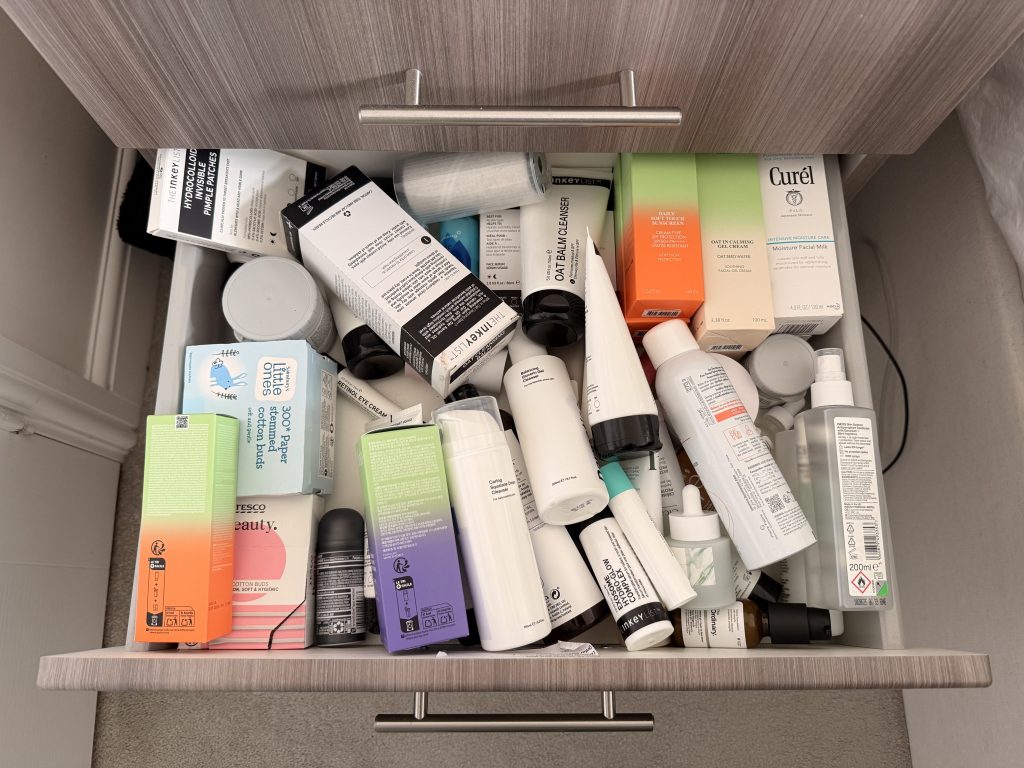
I tried everything the algorithm recommended. I layered actives on top of actives. I double-cleansed, triple-moisturised, retinol-ed before my skin was remotely ready for it. I followed the advice of people with flawless skin who were paid to have flawless skin and attributed it to whichever product they were promoting that week. My barrier was destroyed, although I didn’t have the language for that yet. I just knew my skin looked exhausted, and so did I.
The turning point was removing things, not adding them.
The holy trio
I stripped the shelf back to three products: a cleanser, a moisturiser, an SPF. That was it. No actives, no treatments, no serums with seventeen-step routines printed on the box. Just the basics, consistently, and the patience to let my skin do what it’s actually capable of doing when you stop interfering with it.
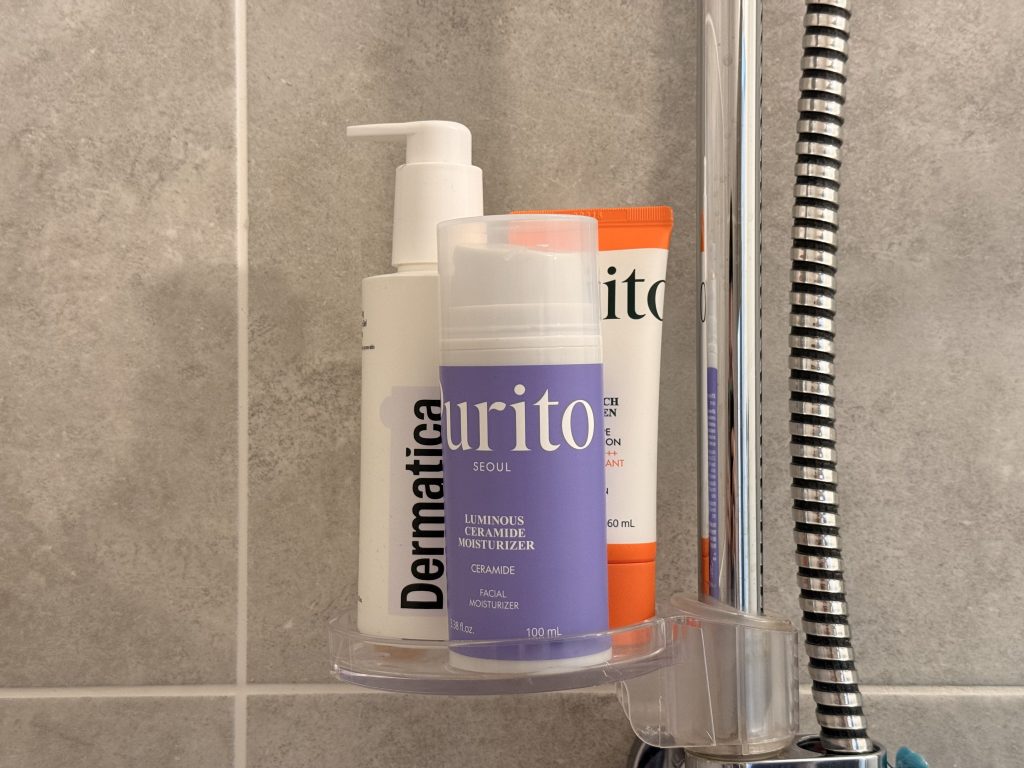
Within weeks, my skin tone started to even out in a way it hadn’t in years. Breakouts calmed. A genuine glow came back — not the manufactured kind from emollients and highlighter particles, but the kind that comes from a skin barrier that’s actually functioning. It turns out I didn’t have difficult skin. I had overwhelmed skin.
That experience sent me down a different kind of research hole — not the kind that ends with more products in a basket, but the kind that ends with understanding how the skin barrier actually works, why it breaks down, and what it genuinely needs. The science is straightforward. The marketing has made it seem anything but.
Why Strip The Shelf?
Strip the Shelf exists because I couldn’t find the resource I wanted. Something written for people who love skincare but are exhausted by it. Something that takes the evidence seriously, calls out the fads that don’t stack up, and isn’t quietly trying to sell you something on the back of every recommendation.
This is a place about barrier health, skin longevity, and the kind of ingredient literacy that lets you read a label and actually understand what you’re putting on your face. It’s about building a routine around what your skin needs, not what’s trending. It’s about doing less, and understanding more.
No fads or gimmicks. No trends without evidence behind them.
Just the basics — explained properly, for once.

