
Some links on this page are affiliate links. I may earn a small commission if you buy through them, at no extra cost to you. This never influences what I recommend
Key Takeaways
- Skipping SPF undoes everything your actives are working to achieve.
- UVA is present year-round and causes the damage you can’t see coming.
- Korean SPF formulations have solved the wearability problem that put most people off daily sun protection.
You can spend a fortune on actives. Without sun protection, you’re wasting your time.
Every morning, thousands of people apply retinol, niacinamide, vitamin C, and AHA (alpha hydroxy acid) exfoliants to their skin. They research ingredients, read labels, and build carefully considered routines. Then they walk out the door without SPF.
That’s not a skincare routine. That’s a very expensive way to tread water.
What UV Damage Actually Does to Skin
The sun emits two types of ultraviolet radiation that reach your skin every day: UVA and UVB.
UVB (B for burn) is the short-wave radiation responsible for sunburn. It’s what most people think about when they think about sun damage.
UVA (A for ageing) is the longer-wave radiation that penetrates deeper into the skin, reaching the dermis where collagen and elastin live. UVA doesn’t burn you. It quietly breaks down the structural proteins that keep skin firm, elastic, and resilient over time. It also drives hyperpigmentation, the uneven tone and dark spots that most people spend significant money trying to correct.
UVA is present year-round. It passes through cloud cover. It passes through glass. That “I only wear SPF in summer” approach isn’t sun protection. It’s seasonal decoration.
Your Actives Can’t Compete With Unprotected Sun Exposure
This is the part nobody says clearly enough.
Retinoids (vitamin A derivatives including retinol, tretinoin, and retinal) stimulate cell turnover and collagen production. They are among the most evidence-backed ingredients in skincare, and they are inherently photosensitising, meaning they make your skin more vulnerable to UV damage while in use. If you’re on a retinoid and skipping SPF, you are actively working against yourself.
AHAs including glycolic acid, lactic acid, and mandelic acid exfoliate the surface layer of skin. Same story. Evidence-backed, photosensitising, and pointless without daily sun protection.
Vitamin C (ascorbic acid) is an antioxidant that helps neutralise UV-induced free radical damage and target hyperpigmentation. It works best alongside SPF. Not instead of it.
The pattern is consistent. The most effective thing you can do each morning is apply SPF and not skip it. Everything else is supplementary.
Why Most People Still Skip It
Formulation has historically been the problem, and it’s a fair complaint. Traditional sunscreens, particularly older Western formulations, were thick, white-casting, and greasy. For anyone with oily or combination skin, layering a heavy SPF over an already active sebaceous situation is a genuinely miserable experience. It pills under makeup, sits on top of skin rather than absorbing, and leaves you looking vaguely laminated by midday.
It took years of trialling different formulas to find anything that didn’t make mornings feel like a chore. The turning point, for a lot of people who’ve been through that cycle, tends to be Korean SPF.
The Case for Korean SPF
South Korea has produced some of the most advanced consumer SPF formulations available, and the difference is immediately obvious on skin.
Korean sunscreens have moved well beyond UV filtration as their only job. Many are formulated with ceramides, the lipid molecules that occur naturally in the skin barrier and help it retain moisture and resist environmental stressors. Others include Centella Asiatica, also called Cica, a plant extract with strong evidence for calming inflammation, supporting wound healing, and stimulating collagen synthesis. These aren’t marketing additions. They’re functional ingredients that genuinely support the barrier while the SPF does its job.
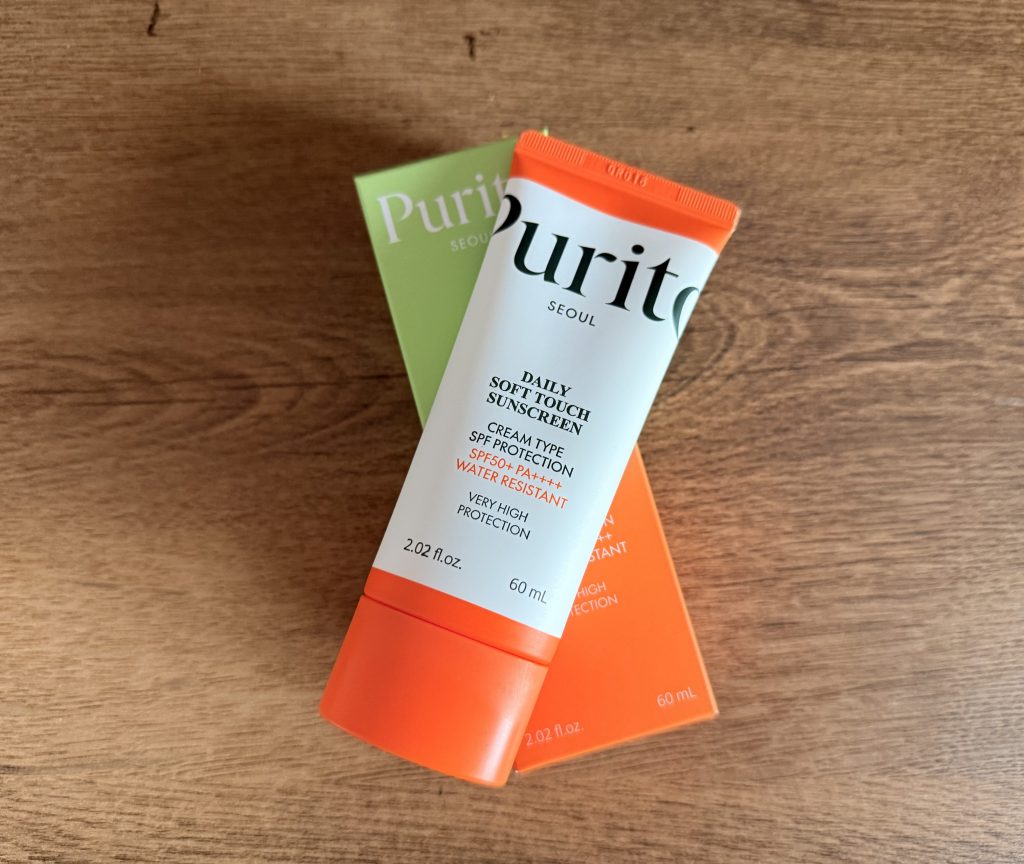
For oily and combination skin, Korean formulations have been a genuine step change. Lightweight, serum-like textures that absorb without residue. No white cast, no grey tint. Some are well-rounded enough to replace your morning moisturiser entirely, which removes one more step and one more reason to skip protection altogether. (my recommendation, Purito Daily Soft Touch SPF)
What to Look For on a Korean SPF Label
PA++++ is the PA rating system (Protection Grade of UVA), used across Japan and Korea to measure UVA protection specifically. The more plus signs, the higher the protection. PA++++ is the highest available. Western SPF numbers only measure UVB protection, so PA tells you what’s actually happening on the UVA side of the equation.
SPF 50+ is the minimum worth using for daily protection. SPF 30 blocks around 97% of UVB rays; SPF 50 blocks around 98%. The difference sounds marginal but compounds over years of daily exposure.
Ceramide NP, AP, or EOP are different types of ceramide that occur naturally in the skin barrier. Worth looking for if barrier support is a priority, which for most people it should be.
Centella Asiatica, Cica, or Madecassoside are all variants of the same thing. Madecassoside is the active compound extracted from Centella. Any of these on the label indicates barrier-calming, anti-inflammatory properties.
Niacinamide (Vitamin B3) is a frequent inclusion in Korean SPF formulations. It helps regulate sebum production, making it particularly useful for oily skin, and it supports barrier function and works on hyperpigmentation over time.
Building Your Morning Routine Around SPF
The reframe is simple. SPF isn’t the last step of your morning routine. It’s the point of it. Everything else either prepares your skin to receive it or works toward the same long-term goals.
A stripped-back morning routine built around barrier health looks like this:
Gentle cleanser to remove overnight products without stripping the barrier, an antioxidant serum if you use one, then SPF 50+ PA++++ as the non-negotiable closer.
If your SPF is a well-formulated Korean option with hydrating and barrier-supporting ingredients, you may not need a separate moisturiser in the morning at all. Fewer products, less cost, less time, and better protection.
The Long Game
Skin longevity isn’t about chasing the newest active. It’s about protecting what you have while supporting what your skin does naturally.
UV damage is cumulative. It doesn’t announce itself every time. It builds quietly over years in the form of collagen loss, hyperpigmentation, and compromised barrier function. The most effective anti-ageing ingredient available requires no prescription and no significant investment.
It just needs to be applied. Every day. Even in January.
Always apply SPF as the final step of your morning routine. Reapply every two hours if spending extended time outdoors.
SPF Recommendations
Below are some of the SPF’s I have tried and enjoyed using without any issues. As ever, this is not a guarantee they will work for your skin type, but just a nod in the right direction.
My Recommendations
PURITO SEOUL Daily Soft Touch Sunscreen, 60ml
My current day to day SPF, perfect for Oily/Combination skin types, ceramides for the barrier and a great price point.
Perfect for: Oily / Combination
Texture: Light cream
Price: Around £15
Availability: Amazon, Boots, YesStyle & Others
Avoid if: You want a glazed finishTHANKYOU FARMER Sun Project Water Sun Cream 120ml
Ideal for Dry skin types, fragrance is listed but relatively low, I have used this for over a year and no issues. Great price point for 120ml.
Perfect for: Normal / Dry
Texture: Watery cream
Price: Around £25 (for 120ml)
Availability: Amazon, Boots & Others
Avoid if: You’re oily and you don’t want to enhance itThe Ordinary UV Filters SPF 45 Serum 60ml
Love a pump bottle, no white cast, serum-like texture and a slight sheen, more than the Purito offering.
Perfect for: Normal
Texture: Serum-like
Price: Around £15
Availability: Amazon, Boots & Others
Avoid if: You have sensitivity around the eyesSKIN1004 Madagascar Centella Tea-Trica Soothing Sun Milk 50ml
Another great korean-beauty option for those with Oily/Combination skin, only caveat is it does contain Niacinamide for those intollerant.
Perfect for: Oily / Combination
Texture: Watery cream
Price: Around £15
Availability: Amazon, YesStyle & Others
Avoid if: You’re avoiding niacinamide

