
Some links on this page are affiliate links. I may earn a small commission if you buy through them, at no extra cost to you. This never influences what I recommend
Key Takeaways
- Seasonal shifts in temperature and humidity directly affect how much your skin produces oil, loses water, and holds moisture.
- Indoor heating is just as damaging to your barrier as cold outdoor air. Both strip moisture from the skin.
- Adjusting your routine does not require new products. Often it is a case of swapping texture or dropping a layer entirely.
- Combination and congestion-prone skin often needs more routine flexibility across the year than drier skin types.
- The best guide to what your skin needs is your skin. Learning to read it accurately is worth more than any seasonal product guide.
Last winter, my skin made it very clear it was unhappy. I have combination skin that leans congestion-prone, so I am used to managing excess oil in some areas while keeping others balanced. But this past winter was different. The central heating was on constantly, the wind outside was particularly relentless, and by January my skin felt tight, looked dull, and was reacting to products it had been fine with for months.
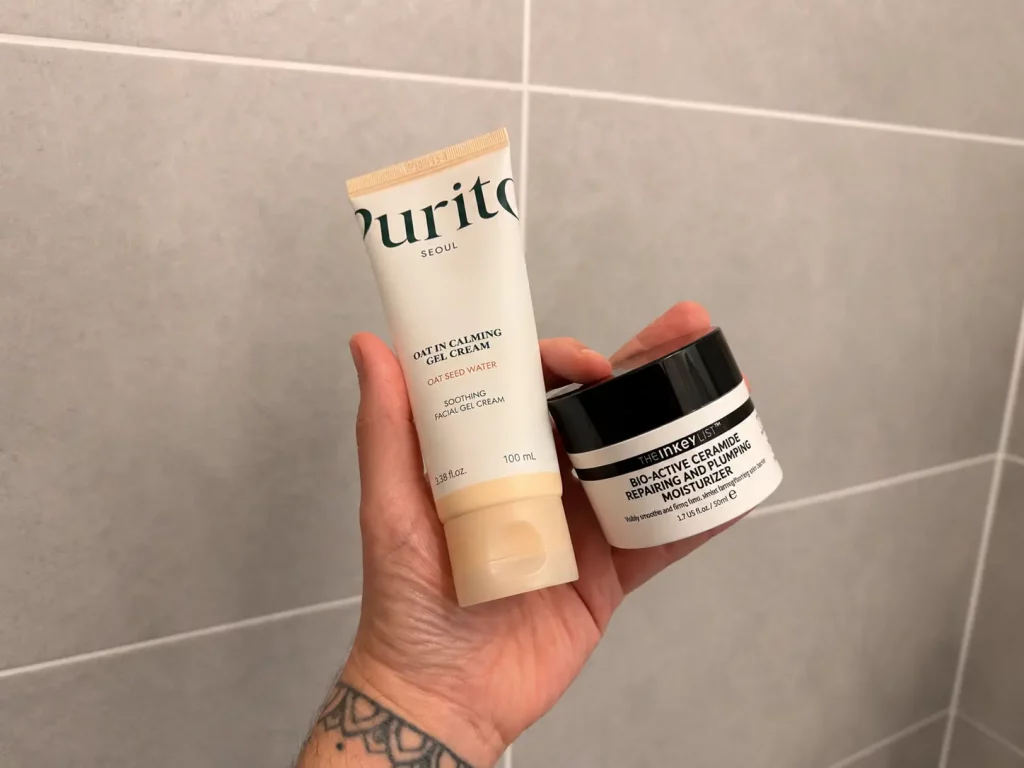
I added a ceramide-based moisturiser on top of my usual hydrating serum to try to lock in more moisture. When that still was not quite enough, I reached for Avene Cicalfate as an optional third layer on the driest patches. It helped. My skin calmed down, the tightness eased, and the barrier held up through the rest of the cold months.
Then spring arrived. I kept layering the same way out of habit, and within two weeks my skin was congested and looking heavy. The routine that had been a lifeline in February was working against me in April. It was a useful reminder that what your skin needs in one season is rarely what it needs in another.
This is not a niche problem. Most people are running the same routine year-round and wondering why their skin keeps misbehaving.
“The routine that was a lifeline in February was working against me in April.”
Why Seasonal Changes Affect Your Skin
Your skin does not exist in isolation. It responds to its environment constantly. Temperature, humidity, wind, and UV exposure all have a direct effect on how your skin behaves, how much oil it produces, and how well it holds onto moisture.
In colder months, lower humidity in the air draws moisture away from the skin. Add in central heating, which strips humidity from indoor air, and your skin can become noticeably drier even if it has never been dry-prone before. Wind compounds this further by physically disrupting the skin’s surface layer.
In warmer months, increased humidity means the air holds more moisture, sebaceous glands become more active, and skin tends to feel oilier. If you are still using the rich, occlusive products from winter, you are putting a lid on skin that is already producing more of its own.
- Autumn / winter
- Low outdoor humidity
- Dry indoor heating
- Cold wind exposure
- Reduced sebum production
- Increased transepidermal water loss
- Barrier more easily disrupted
- spring / summer
- Higher outdoor humidity
- Air conditioning (also drying)
- Increased UV exposure
- More active sebaceous glands
- Skin holds moisture more easily
- Heavier products can clog pores
How to Actually Assess What Your Skin Needs
Before changing anything, you need to look at what is actually happening with your skin rather than going by what season it says on the calendar. Skin does not switch modes on the first of December.
There are a few simple things to observe over a few days before making any changes.
SKIN ASSESSMENT CHECKLIST
- Wash your face, apply nothing, and wait an hour. Then note where it feels tight, where it feels comfortable, and where it looks shiny.
- Check your midday oil levels. Is the T-zone producing significantly more oil than usual? Or has it become drier since the temperature dropped?
- Note your texture and congestion. Are pores looking more blocked? Are you getting small bumps or closed comedones where you did not before?
- Think about how your products feel on application. Does your usual moisturiser feel heavy and uncomfortable, or does it absorb easily and feel like your skin is drinking it in?
- Look at your environment. Has the heating gone on? Are windows open all day? Both matter.
This does not need to be a lengthy process. A few days of paying attention is usually enough to get a clear picture. The key is to separate what you think your skin needs from what it is actually telling you.
When Should You Review Your Routine
A rough rule of thumb: review your routine at the start of each season, or whenever there is a significant shift in your environment. For most people, that means two meaningful review points in the year.
autumn
The most straightforward fit. A ceramide moisturiser addresses depletion directly and supports comfort over time. Richer textures work well here.
winter
Maximum barrier support. Ceramides, occlusives, minimal actives if skin is reactive.
spring
Start stripping back layers. Watch for congestion as sebum picks up.
summer
Lightweight textures. SPF non-negotiable. Let your skin breathe.
In practice, the transitions that matter most are autumn into winter and winter into spring. These tend to produce the most noticeable shifts in how the skin behaves. Summer to autumn is usually more gradual.
It is also worth noting that where you live makes a difference. Central heating varies from home to home, and the UK weather in particular is inconsistent enough that you may find yourself adjusting more than twice in a year. If your skin is changing, your routine is allowed to change too.
Practical Tips for Finding the Right Routine for Your Skin Type
A seasonal refresh does not mean buying a full new set of products. For most people, it means adjusting what you already have.
FOR COMBINATION AND CONGESTION-PRONE SKIN
This skin type tends to need the most flexibility across the year. In winter, the T-zone may behave drier than usual while the cheeks are still getting congested. In summer, oil production can increase across the board. The strategy is not to treat the whole face the same way but to adjust by zone where necessary. A gel cream (such as the Purito Oat In Calming Gel Cream) over the whole face in the AM is often sufficient in warmer months. In winter, a richer formula on the drier outer areas while keeping the T-zone lighter is a reasonable approach.
FOR DRY AND DRY-SENSITIVE SKIn
Winter is when dry skin tends to suffer most. The combination of low humidity, wind, and heating can push already-compromised skin into a reactive state. Prioritising barrier repair over actives during this period is worth it. In warmer months, you may not need to lighten up as dramatically as other skin types, but swapping a very heavy cream for a slightly lighter one is usually enough.
FOR OILY SKIN
Oily skin is not immune to winter dryness, despite how it might feel. Cold air and heating can still disrupt the barrier, which sometimes triggers more oil production as a compensatory response. Skipping moisturiser is not the answer. A lightweight gel moisturiser in winter still supports the barrier without adding unnecessary weight. In summer, the same rule applies but with a closer eye on SPF formulation and how it sits under makeup or throughout the day.
A product that lists “ceramide” near the very bottom of a 40-ingredient list is mostly marketing. Concentration matters.
The AM and PM Split: A Useful Framework for Seasonal Adjustment
One practical approach to seasonal transitions is to treat AM and PM separately. The AM routine is exposed to the environment all day, so texture and finish matter more. The PM routine is where you can focus on repair without worrying about how it sits under SPF or how it looks by midday.
am routine
Autumn / Winter
Gentle cleanser, hydrating serum, ceramide-rich moisturiser, SPF. Optional extra layer (e.g. Cicalfate or balm) on dryest areas only.
Spring / Summer
Gentle cleanser, gel cream or lightweight moisturiser, SPF. Skip extra serum layers if skin is comfortable.
PM routine
Autumn / Winter
Double cleanse if wearing SPF. Hydrating serum or toner. Richer repairing cream. No active if skin is reactive.
Spring / Summer
Double cleanse. Lightweight hydrating layer. A repairing cream that is less occlusive than winter formula.
Currently, I am running a gel cream in the AM and a richer repairing cream in the PM now that warmer weather has arrived. The daytime routine is lighter, the skin breathes better, and I am not getting the congestion I was seeing when I tried to carry the winter layers forward. The PM repairing cream is still doing the work of keeping the barrier in good shape overnight without the heaviness.
It is not a dramatic change. It is one product swap in the morning. That is often all it takes.
What to Actually Look for in Seasonal Product Swaps
If you are looking to adjust your routine as the seasons change, the main variable to focus on is texture rather than ingredient lists. The ingredients that support your barrier are relevant year-round. What changes is how much occlusion and weight your skin needs at any given time.
In colder months, look for:
- Ceramide-containing moisturisers (any form: cream, lotion, or gel-cream)
- Humectant-forward serums (hyaluronic acid, glycerin, polyglutamic acid)
- Occlusive finishers only where needed, not all over
- SPF that does not leave the skin feeling stripped
In warmer months, look for:
- Gel creams or water creams that hydrate without adding excess weight
- SPF formulations that do not sit heavily (Korean SPF formulations tend to be particularly good on texture)
- Serums or toners that can stand in for a heavier moisturiser during the day if skin tolerates it
The barrier ingredients do not change: ceramides, niacinamide, panthenol, and fatty acids are useful in every season. What changes is the vehicle they arrive in.
A NOTE ON ACTIVES AND SEASONAL TRANSITIONS
Retinoids, AHAs, and BHAs are useful tools but they carry a higher risk of barrier disruption when your skin is already compromised by cold weather or environmental stress. If your skin has been reactive, dry, or irritated over winter, the instinct to introduce a new active in spring makes sense, but give your barrier a few weeks to stabilise first. There is no great urgency. Starting with lower frequency and working up is sensible regardless of time of year, but it is especially worth following if your skin has been through a rough winter patch.
Adjusting your routine seasonally is not about trend-chasing or building an elaborate new regimen every three months. It is about paying enough attention to know when what you are doing is still working and when it is not. That habit alone is worth more than any product switch.

